
A story of learning in the complex domain
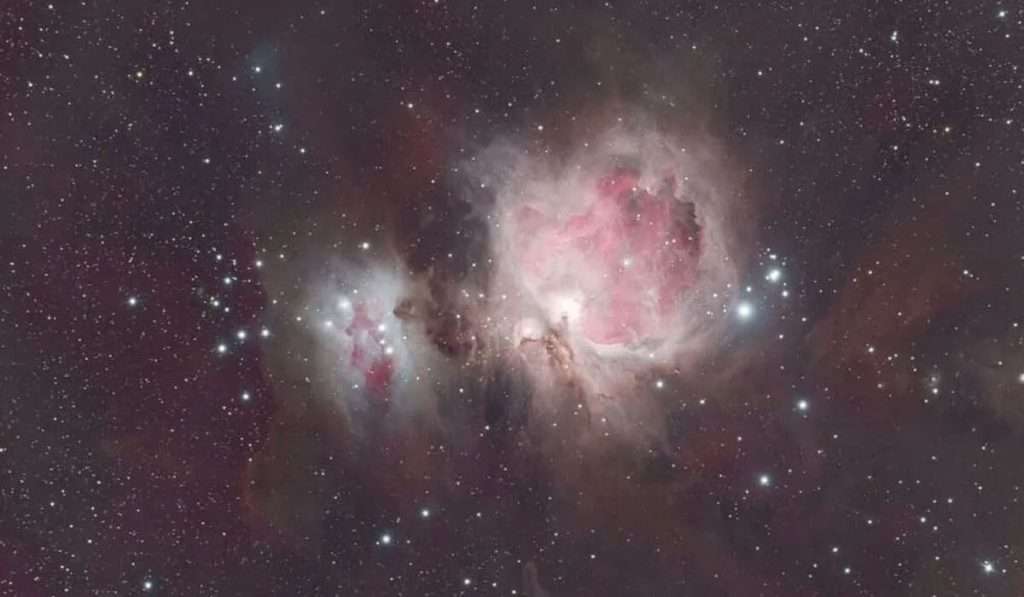
In my astrophotography journey I used the Scrum framework to tackle a complex problem. Through short Sprints and plenty of failed experiments I learned what works and what does not. Each iteration brought me closer to my first picture of the Great Orion Nebula, adding value one increment at a time and moving me towards my vision.
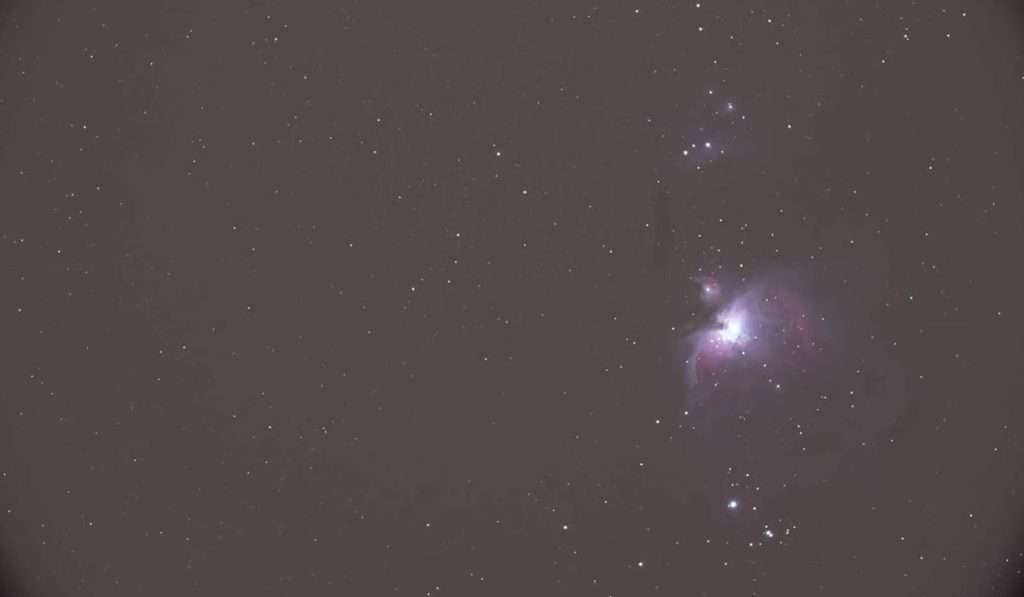
My first telescope
What was I thinking? I bit off far more than I could chew in my first Sprint. Long-running experiments and big mistakes are costly at this stage of learning. The mount was faulty, and because I had no idea what I was doing I did not realise it would only move in declination and a limited range of right ascension. Time for smaller, easier experiments.
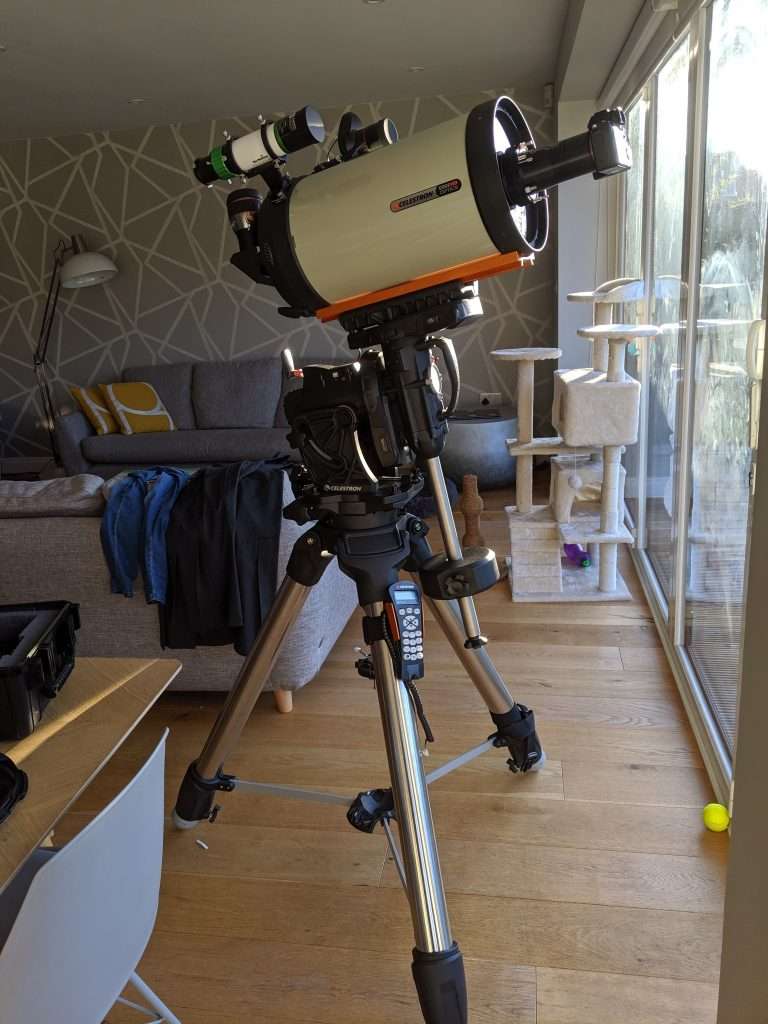
Solving complex problems can feel almost impossibly frustrating. It is the passion to achieve your vision one small step at a time that gives you the energy to keep going. The technical skills you master along the way build strong foundations and growth.
Vision: let people explore the universe from the comfort of their own home
Product Goal: just get something working
I love learning through experimentation. There is nothing like failing fast and setting up the next experiment. When it works, it is pure glee. Every clear night was a new experiment.
I worked in one-week Sprints. Even when the weather is poor there is always something to do.
I swapped to a simpler, faster refractor with a shorter focal length as a learning platform: a William Optics FLT132 at f/7, which gives a 920mm focal length. It is basically a big zoom lens. For comparison, a phone camera lens is around f/1.8 and 26mm, so very fast and very wide.
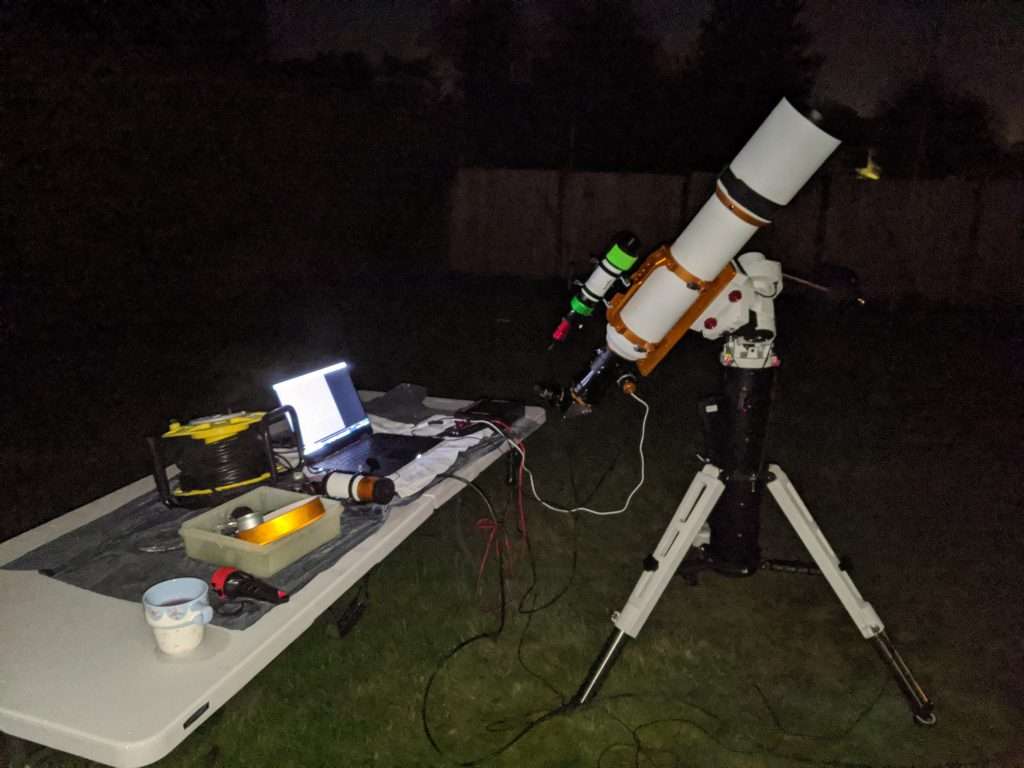
First, set up the mount and telescope: level it, balance it, polar align it, then align to several stars to build a navigation model for the mount.
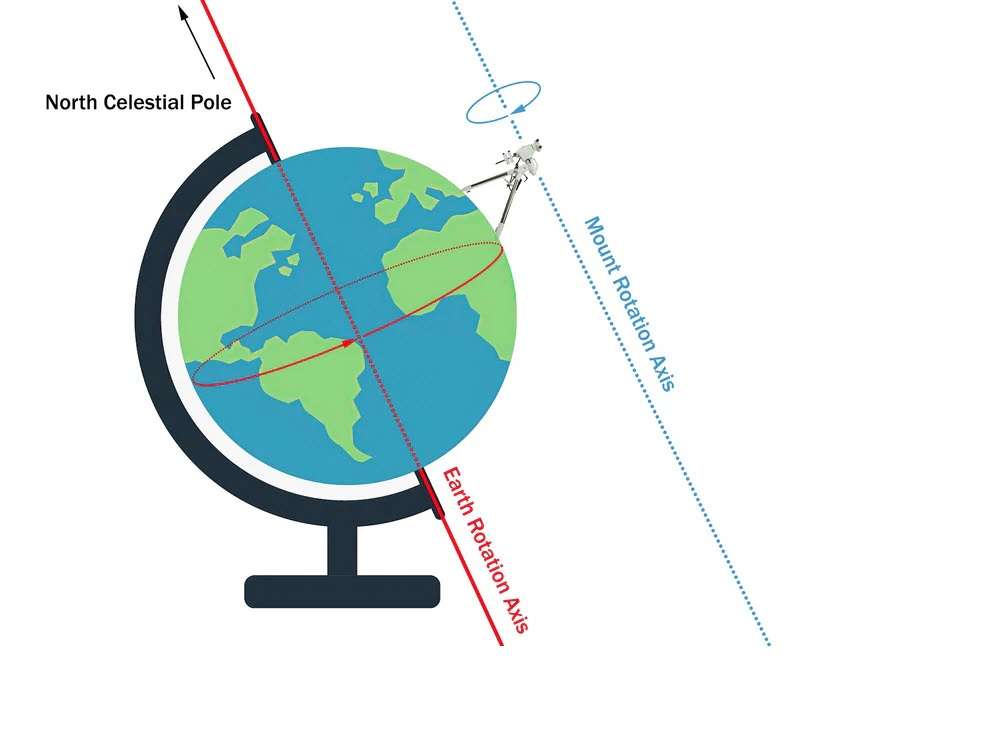
Every telescope needs polar aligning to the rotation of the Earth, in my case to the north celestial pole. Once aligned, finding things in the night sky gets much easier. It means properly understanding the Earth's rotation. Right ascension and declination are the coordinates for finding objects, and the sky is constantly changing because of the Earth's 23.5-degree tilt.
Product Goal: photograph the night sky
At night our eyes adjust to the dark using peripheral vision. Everything looks black and white, and most of the detail in the sky is hidden from poor human eyes. I needed to collect more photons, which meant new experiments. Each image is built from at least 50 sub-frames, so the signal outweighs the noise and you get a lovely image. Many more experiments were needed to understand how that works.
Once I could set up and operate the telescope and mount from a computer, it was time to start taking pictures.
Understanding how it all works
Many Sprints went into discovering astrophotography:
- Learning what a field flattener is, and fitting the camera and flattener at exactly the right distance. One millimetre out in any direction distorts the image.
- Understanding focal length and back-focus distance.
- Producing a flat image. The lens is curved and the sensor is flat, so extra lenses are needed to correct it.
- Exposure time and gain.
- Dew, dew, dew. Space is cold, and staring at it chills the lens. Below the dew point you get dew. Dew is evil. Dew is bad. Hence experiments with heating.
- Guiding: using a second camera to track a star and correct the mount's position during long exposures. The better the alignment and model, the better the images.
- Flat, dark and bias frames. Sensors create noise. Not every pixel works: some are hot and white, some are cold and black. Because the lens is curved, light falls unevenly on the sensor and the edges are darker. In a bright daytime shot you would never notice. When the signal from a target is tiny, every photon counts.
Product Goal: eliminate the annoying issues
Noise
Sensors get hot during long exposures of five to twenty minutes, and heat creates noise. Noise means bad pictures, especially in summer. High gain gives faster images but loses detail.
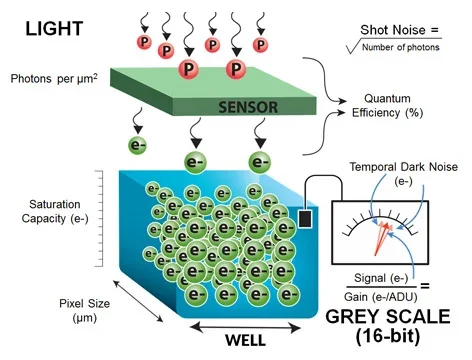
A cooled astro camera can hold the sensor at 35 degrees below ambient. There is a learning curve here too. Experimenting with full well depth (yes, literally electron buckets), gain, temperature, monochrome versus colour, pixel size, dynamic range, seeing conditions and arcseconds per pixel taught me the capabilities and limits of these complex cameras.
The scourge of light pollution
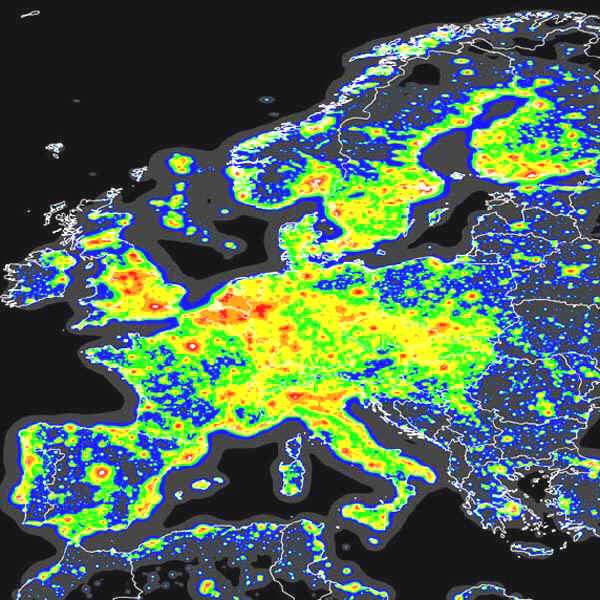
It is a sad truth that, according to a study by Italian and American scientists, a third of the world's population and 80% of Americans cannot see the Milky Way. The Milky Way is an awesome cosmic wonder to behold and ponder. More experiments were needed to remove the gradients created by street lighting in the UK. Most of that lighting is unnecessary: modern LEDs could switch on only when somebody approaches. LEDs are also far worse than the old sodium lamps for astronomers, because they emit across the whole visible spectrum and are hard to filter out.
The next experiment was trying various filters, including narrowband filters, against the UK's terrible light pollution.
The scourge of satellites
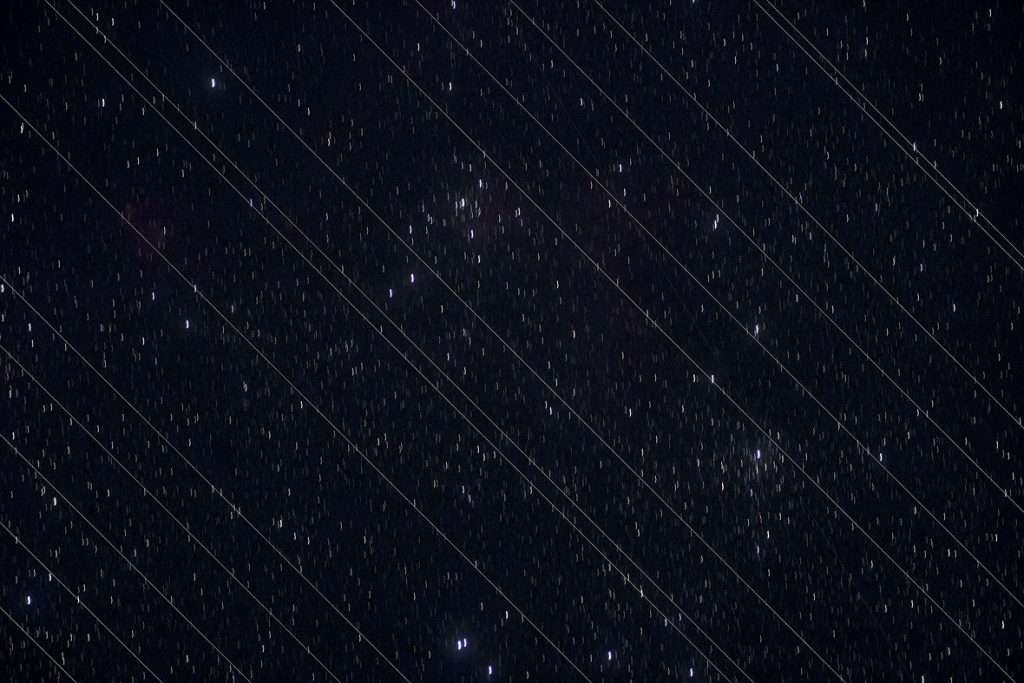
Say no more. Thanks to projects like Starlink and the absence of any regulation of the night sky, Earth-based astronomy is at permanent risk. The only fix is image processing to remove the trails.
Product Goal: stay warm through automation
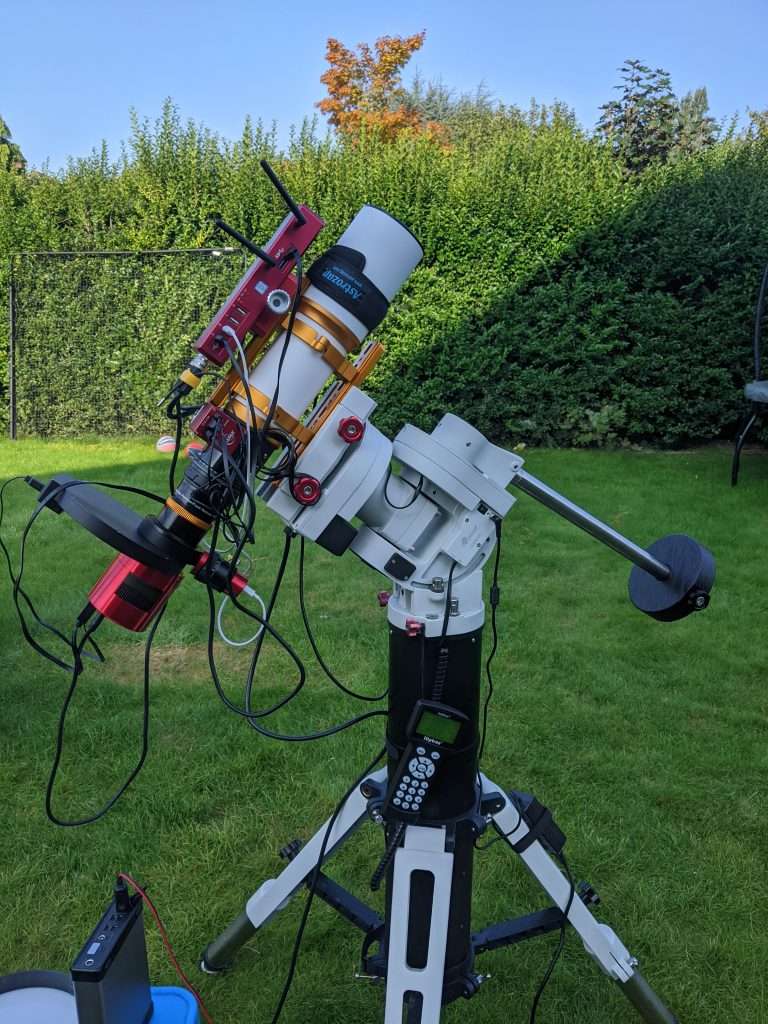
I want to be warm. Winter is cold. At this point I still had to be with the equipment to move between targets and take image sequences. So I experimented with automation: an industrial computer strapped to the telescope, connected over Wi-Fi or Ethernet. No laptop in the garden all night. Full remote control.
Product Goal: more advanced telescopes
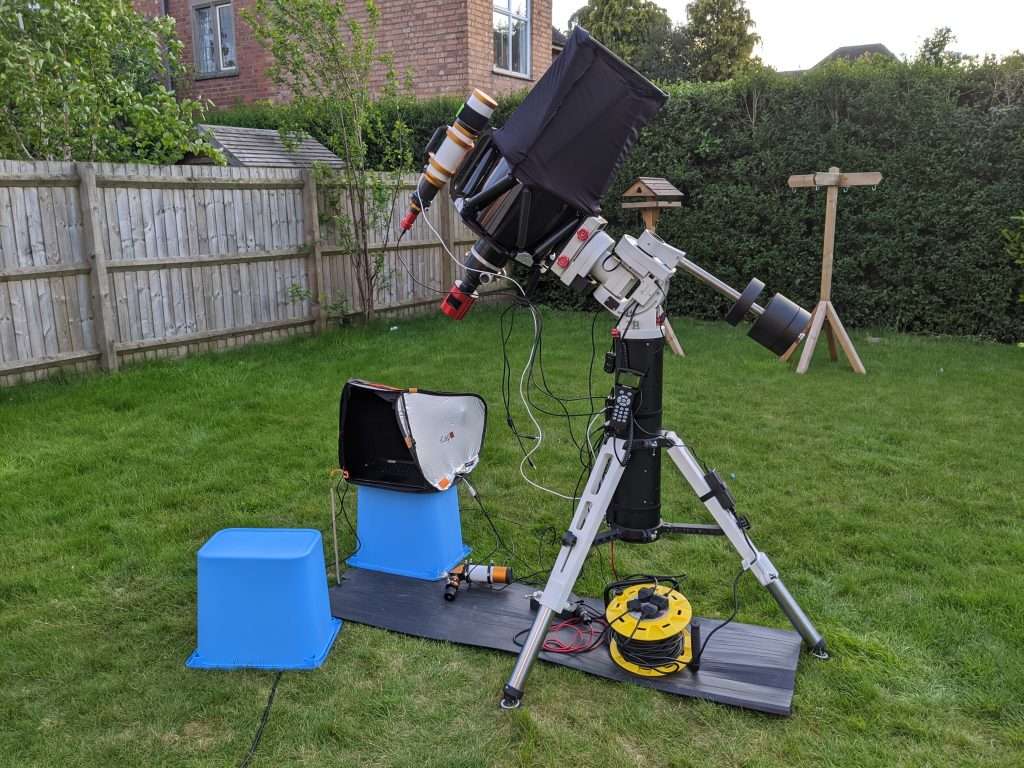
Refractors have great resolution, but for more magnification a reflector is better. It is basically a mini Hubble. They are harder to use and need laser collimation to line up two mirrors, which meant going back to basics with the experiments. Moving to advanced kit too quickly can feel like a step backwards. It is a risk that delays value, but sometimes it is necessary to achieve the vision. It took three months to master the Ritchey-Chrétien.
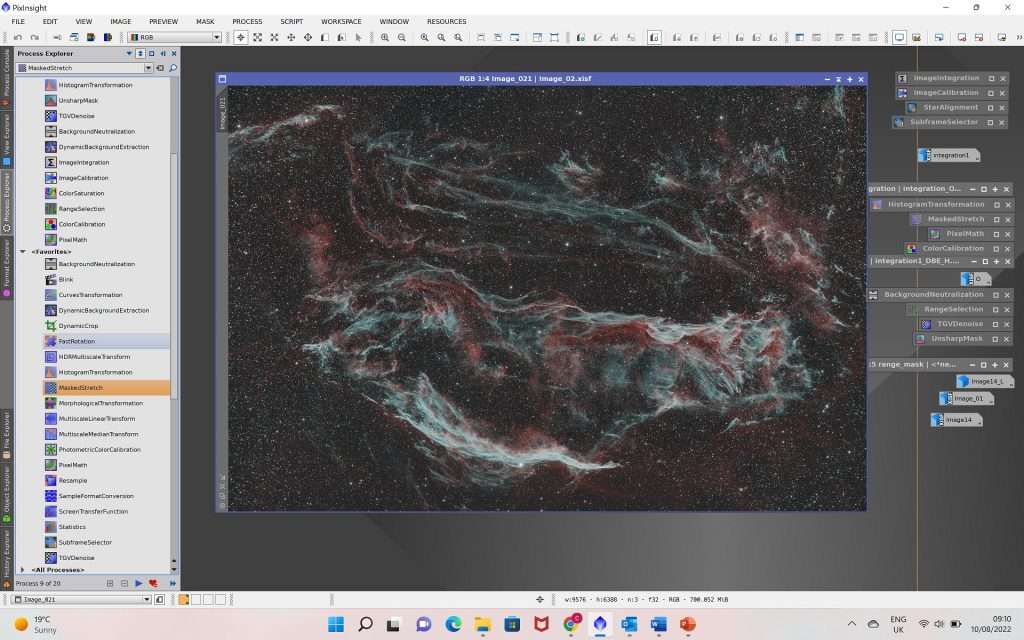
Product Goal: professional image processing with PixInsight
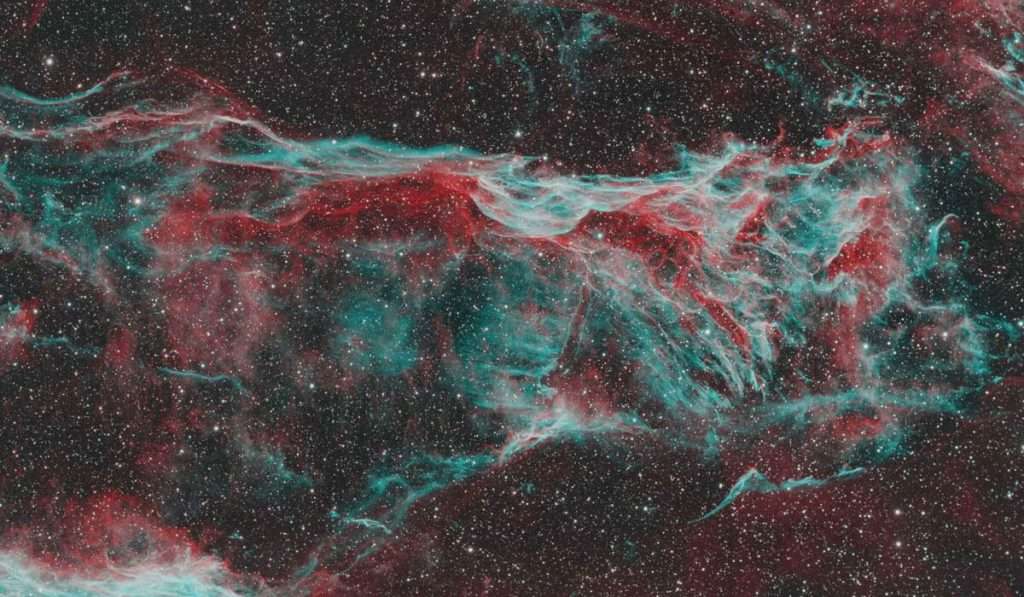
Taking on a professional processing package is daunting. The results are great, but only after a few hundred experiments did I become a little more proficient and consistent. This image was built from 240 monochrome hydrogen-alpha and oxygen sub-frames.
Product Goal: think bigger
Through all that experimentation I had become proficient at setting up and consistently taking good images. But everything was limited by light pollution, the wrong airflow, the wrong weather and humidity, and seeing conditions that cap image resolution.
After much research, the answer was to move the equipment to a dark site in Spain or Chile used by professional and amateur astronomers. Fregenal de la Sierra in Spain has an excellent Bortle rating and everything I need, and it is closer than Chile if I need to visit. Chile is still on the list.
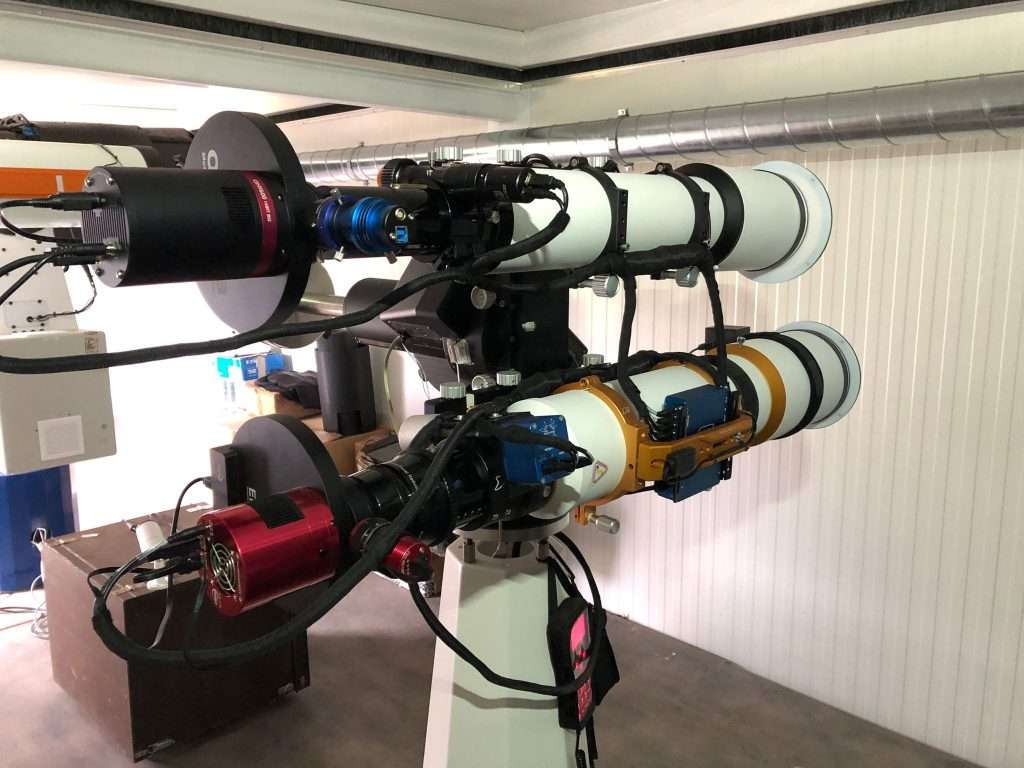
It felt great setting up in Spain knowing exactly what I was doing, using the practices I had discovered through all those explorations. A roll-off roof, a dual telescope rig, industrial computer control and remote access. Two hundred and fifty cloudless nights a year, very low light pollution and good seeing.
Product Goal: diagnose issues remotely
Something always goes wrong. When you can be there it is easier to diagnose and confirm. Remotely, experience and more often intuition come into play. Autofocus slipping, a broken filter wheel, camera moisture too high, to name a few.
Writing my own software to analyse image quality in real time
With everything I had learned I could start solving automation problems that the professional packages do not address. I had great fun analysing image quality in real time, including curvature and sensor tilt, and correcting it while sprinting towards this goal.
Experimenting creates waste. Not experimenting creates nothing good at all.
The best advice I can give: keep experiments small, goal-focused and lightweight. You create less waste and get the best value for the cost.
Product Goal: automate customers' targets
Bringing it all together. These Sprints enabled public requests to professionally photograph a target of the customer's choice, delivering the raw data and an automatically processed image. The images in this post are far smaller than the real thing. A single processed image can hold a gigabyte of HDR data. Reproducing these results from scratch could cost tens of thousands of pounds. With this service, results are guaranteed for a fraction of that.
Vision achieved
This is why I use the Scrum framework in my astrophotography. Through small iterations and increments I maximise value, accelerate learning and get the most from my investment. It took 18 months to bring the vision to life.
I now have a viable business model where individuals request a target and receive a fully automated dataset and a processed image. Scrum played a central part in reaching those milestones.
Next vision: different focal lengths, and the southern hemisphere.
How will you bring your curiosity and creativity to bear through experimentation, solve problems in the complex domain, and have fun doing it?