

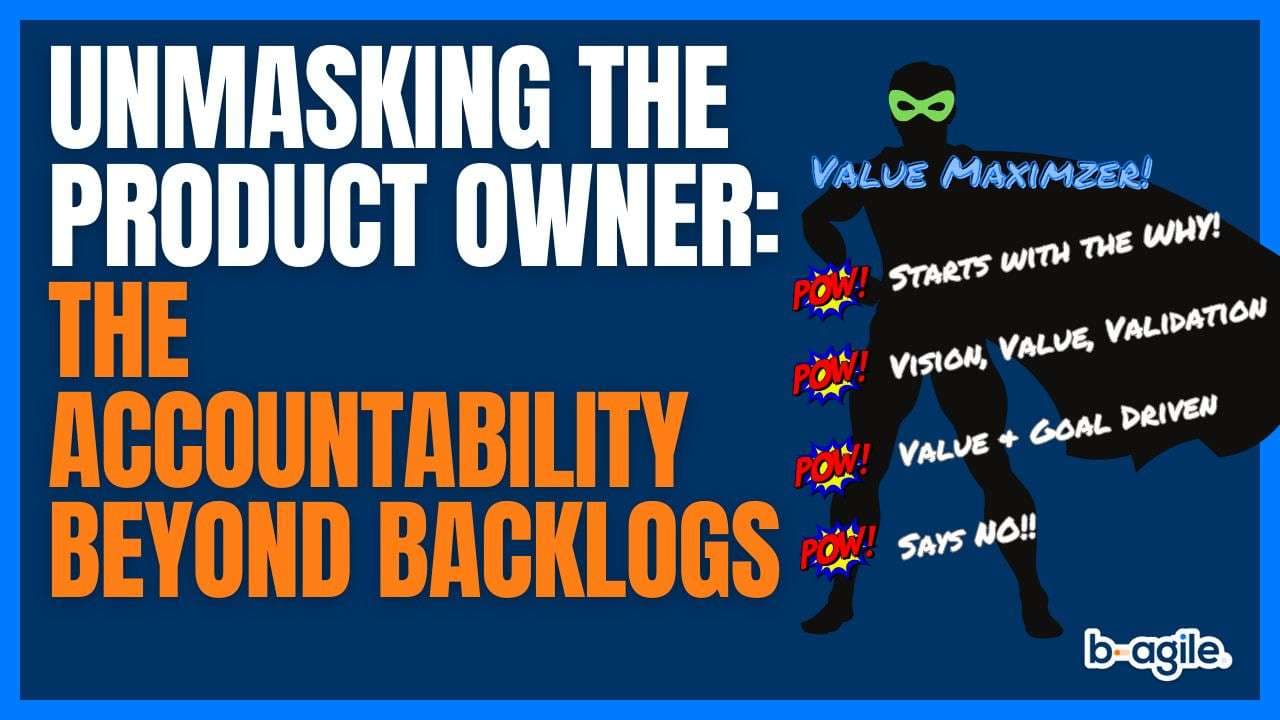
Is the Product Owner just a Product Backlog manager? Think again.
The Product Owner is one of Scrum's core accountabilities, entrusted with maximising the value delivered by the Scrum Team. Unfortunately, the accountability is often misunderstood. The Product Owner is not there to manage tasks or act as a go-between for stakeholders and the team. They are the value maximiser: collaborating, facilitating and aligning effort to deliver meaningful outcomes.
That goes far beyond managing the backlog. It takes strategic thinking, effective collaboration and a commitment to empiricism, so the product keeps delivering value in a changing world. The Product Owner works with stakeholders to refine goals, facilitates decisions grounded in evidence, and keeps the team focused on outcomes rather than outputs.
This post covers:
- How a mini-CEO mindset helps Product Owners unlock true value
- The common misconceptions about the accountability
- Practical steps for focusing on outcomes rather than outputs
- Why collaboration and value-driven decisions matter
Curious about the other Scrum accountabilities? Read What is a Scrum Master? The true role revealed.
Breaking the myths about product ownership
Despite being one of Scrum's key accountabilities, many Product Owners never fulfil their potential because of misconceptions or organisational dysfunction. The most common misunderstanding is that the Product Owner merely prioritises tasks, a glorified task manager. In reality the accountability is far more dynamic: leadership, collaboration and value-driven decision-making.
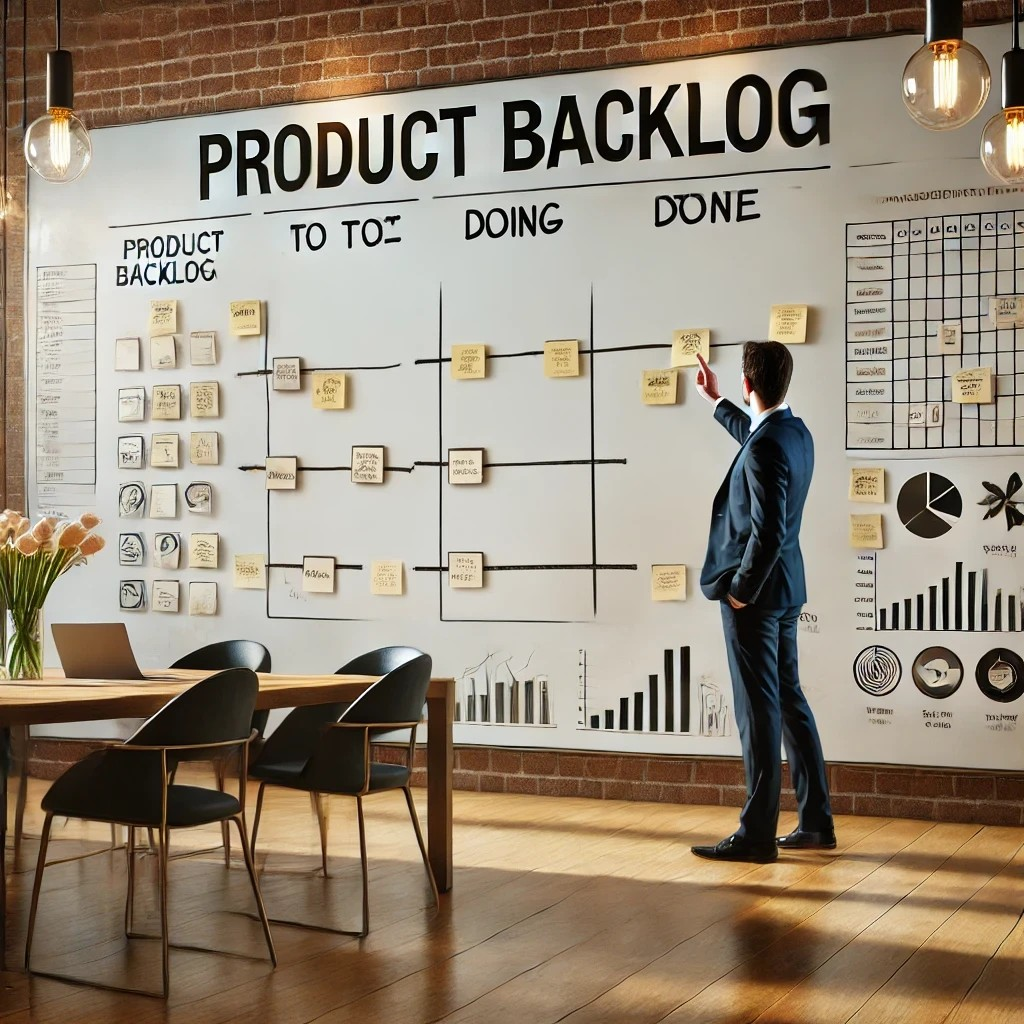
Consider this statement from the Scrum Guide:
"The Product Owner is also accountable for effective Product Backlog management, which includes: – Developing and explicitly communicating the Product Goal; – Creating and clearly communicating Product Backlog items; – Ordering Product Backlog items; and, – Ensuring that the Product Backlog is transparent, visible and understood.
The Product Owner may do the above work or may delegate the responsibility to others. Regardless, the Product Owner remains accountable."
Misreading "effective" Product Backlog management leads to an overemphasis on activities that overshadows the core accountability. The Product Owner's pivotal role is maximising the product's value: championing the why, and making sure the what aligns with it, not the other way round.
The common challenges Product Owners face
| # | Issue | Description |
|---|---|---|
| 1 | Feature factories | Building features without validating whether they deliver value. |
| 2 | Project mindset over product thinking | Focused on outputs (tasks completed) rather than outcomes (value delivered). Acting as delivery managers instead of entrepreneurs. |
| 3 | Backlog management, not the why | No Product Goal or vision. The first question should always be "What is the problem? Does it still exist?" |
| 4 | Component owners, not Product Owners | Overemphasis on parts of a system rather than the whole product. |
| 5 | Product Owner in name only | Not given the authority to make meaningful decisions. |
| 6 | Lacking product management skills | Missing the critical product management skills the accountability requires. |
A Product Owner in name only, for example, cannot drive meaningful outcomes without the organisation respecting their authority. As the Scrum Guide puts it:
"For Product Owners to succeed, the entire organization must respect their decisions."
Is your Product Backlog riddled with dependencies? Product Owners often turn out to be component owners rather than true Product Owners. If that resonates, read Escaping the Product Owner's trap.
The Product Owner as captain of the ship
A useful way to think about the accountability is the captain of a ship. On a small boat the captain may steer, maintain the vessel and work alongside the crew. Their ultimate accountability is that the ship reaches its destination without sinking. The captain of a cruise liner may not steer or handle maintenance, but the accountability is the same.
The Product Owner can delegate responsibilities but stays accountable for effective Product Backlog management and for maximising value. Delegation matters most when scaling, where the Product Owner relies on the team's expertise while steering towards the Product Goal.
What does a Product Owner really do?
At its core the accountability is to maximise the value of the product. It is not about managing tasks. It is about making sure the Scrum Team delivers meaningful outcomes. To do that, the Product Owner:
- Defines and communicates the Product Goal and vision. A clear Product Goal means the team and stakeholders understand the why behind the work.
- Prioritises strategically. Product Backlog items are ordered not by urgency alone, but by their potential to deliver business goals and customer satisfaction.
- Validates and adapts. Using metrics, feedback and evidence, the Product Owner confirms that what was delivered provides measurable value.
As the Scrum Guide states:
"The Product Owner is accountable for maximizing the value of the product resulting from the work of the Scrum Team."
Focusing on these three areas bridges the gap between vision and execution, and steers the team towards delivering value rather than completing tasks.
Embrace a product mindset
One of the biggest challenges is breaking free of a project mindset. A project mindset prioritises fixed deadlines, budgets and predefined requirements, criteria that frequently fail to produce a successful product.
A product mindset focuses instead on delivering outcomes, validating assumptions and continuously adapting on evidence.
The project paradox shows the problem with traditional project management for product delivery:
- The paradox. In a project the most critical decisions, scope, budget and deadline, are made up front, when we know the least. By the time we have the insight to decide well, the flexibility to adapt has usually gone.
- The reality. Delivering on time, on budget and in scope does not guarantee a successful product. The real question is: did the product deliver value?
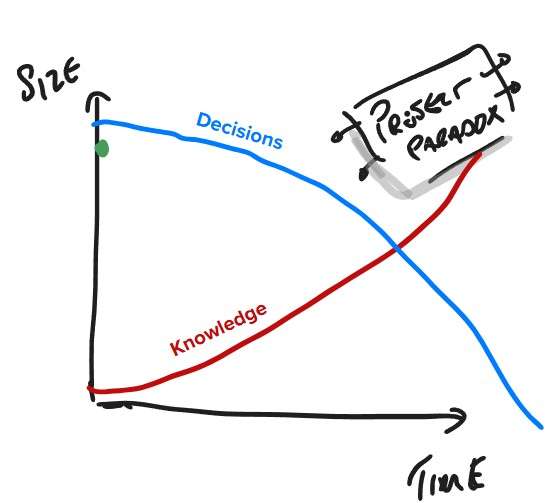
That is why Product Owners need to shift from rigid project plans to an iterative, evidence-based, empirical approach, a core principle of Scrum. For the foundations of empiricism, read What is Scrum? Uncovering its true essence.
"Scrum is founded on empiricism and lean thinking. Empiricism asserts that knowledge comes from experience and making decisions based on what is observed."
In Scrum we recognise that what is often called a requirement is really an assumption. Assumptions reflect what we believe is needed, or what we think customers want, and they must be validated to establish their value and accuracy. A successful Product Owner challenges them constantly through frequent validation, so the product aligns with real customer needs and delivers meaningful outcomes.
Leading as a value maximiser
To lead effectively, a Product Owner adopts three key practices:
- Validation and adaptation. Measure and validate delivered features to confirm they provide real value.
- Visionary leadership. Define and communicate a clear product vision, and align all effort with achieving it.
- Strategic prioritisation. Order Product Backlog items by their impact on business goals and customer satisfaction, not just urgency.
Thinking like a mini-CEO or entrepreneur
Product Owners balance customer needs, business goals and team capacity. Tools such as impact mapping and user story mapping build collaboration and alignment, so effort delivers meaningful outcomes.
The power of saying no. A clear Product Goal lets a Product Owner confidently say no to requests that do not align with the broader vision. When a stakeholder asks for a new feature, instead of agreeing immediately, ask:
- "Is this in line with the Product Goal?"
- "What value will this feature deliver, and how will we measure it?"
Grounding decisions in the Product Goal keeps the focus, avoids distraction, and drives greater value.
How to know whether you are delivering value
Maximising value takes a value-driven mindset and actionable metrics. Ask yourself:
- Do I know how much each Sprint costs?
- Am I balancing new work, technical debt and business-as-usual?
- What is my innovation rate per Sprint?
A value-driven Product Owner:
- Uses metrics such as the usage index to measure outcomes.
- Removes unused features to reduce the total cost of ownership.
- Regularly validates and refines the Product Backlog.
As the Scrum Guide emphasises:
"The Product Owner may do the above work or may delegate the responsibility to others. Regardless, the Product Owner remains accountable."
Escaping the feature factory
One of the biggest traps is the feature factory, where the team delivers outputs, features, tasks and backlog items, without ever validating their value. A feature factory usually lacks clear goals, so development runs on endlessly without meaningful outcomes.
Signs you are in a feature factory:
- A Product Backlog with 100 or more items, many over a year old.
- No clear Product Goal guiding prioritisation.
- Features added but rarely revisited to assess their value.
- A focus on story points or completed tasks instead of business outcomes.
Steps to break free
- Evaluate and refine regularly. Keep asking "Does our Product Backlog align with the Product Goal?" Remove irrelevant or outdated items.
- Validate every delivery. After delivering a feature, ask "How do we validate its value?" Use Evidence-Based Management to measure outcomes.
- Act on unused features. If a feature is not being used, ask "Should we improve it or delete it?" Removing unused features reduces the total cost of ownership.
- Implement simple metrics. Use telemetry or logs to track usage and gather insight you can act on.
Shift the focus from outputs to validated outcomes and your team delivers real value, not just more features.
When is value actually achieved?
Value is achieved only when an Increment reaches customers and its impact can be measured. Until then, Product Backlog items are assumptions awaiting validation.
That is why the Product Owner's role in the Sprint Review is critical. It is the formal opportunity to assess progress and confirm alignment with customer and business needs. It is also why a valuable, Done Increment every Sprint matters: it is the only way to gather real feedback.
Approach every Sprint as if it were the last, so that each Sprint's outcomes are worth the investment. That mindset forces a critical look at where to focus next.
During the Sprint Review the Product Owner can lead the discussion on:
- Releasing early. "Is what we have valuable enough to release now and gather feedback?"
- Aligning goals. "Does the Product Goal still make sense? Does the product vision need adjusting?"
The Sprint Review lets the Scrum Team and stakeholders inspect progress, gather real-world feedback and adapt. As the Scrum Guide highlights, it is vital for alignment and maximising value. For more, read Product Owners want a perfect Definition of Done.
Closing reflection
The Product Owner's accountability is to maximise the value of the product. If your backlog feels overwhelming, or you are unsure whether your features make any impact, it is time to rethink. Ask yourself:
- Am I driving outcomes, or just delivering outputs?
- Does my team understand the Product Goal and align their work to it?
- What is stopping me becoming a true value maximiser?
- How are we measuring value, and when are we validating it with customers?
Effective product ownership starts with a commitment to accountability, collaboration and focus. Are you ready to embrace your accountability and deliver lasting impact?
To see how the accountability translates into day-to-day responsibilities, read 6 essential responsibilities of a Product Owner.
For the tools and practice to become an effective Product Owner, our Professional Scrum Product Owner course is the place to start.
Go deeper
Professional Scrum Product Owner (PSPO)
Put this into practice with the course that covers it in depth.
View the course