

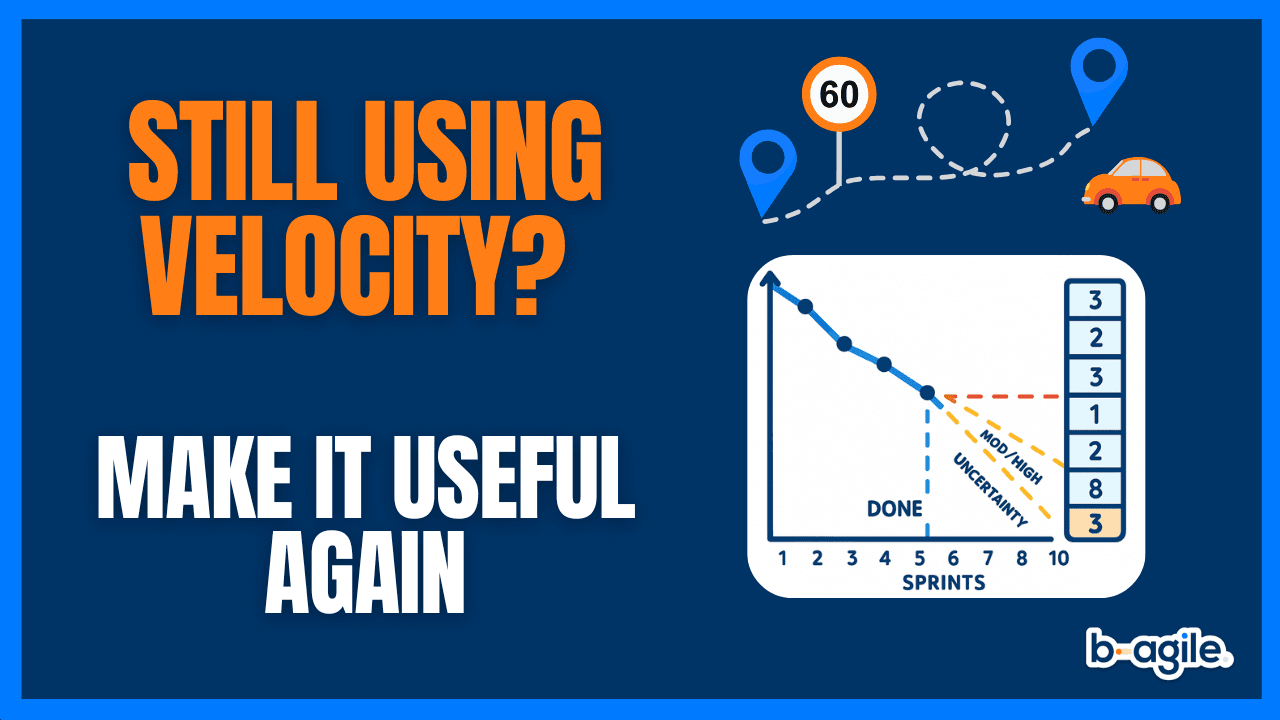
In the previous post we looked at how velocity gets misinterpreted:
- Averages become commitments.
- Story points turn into deadlines.
- We lose sight of what estimation is really for: helping better conversations happen.
If you missed it, start with Velocity. It's not what you think it is. That post built on the opening piece, Agile estimation isn't broken. But the thinking might be.
With that groundwork laid, we meet teams where they are and help them grow from there.
Many teams still track velocity and still use release burndowns. Are they great tools? No, there are better ways. But what is familiar gives us a way in.
Shift the conversation
Instead of relying on an average, apply what you know about uncertainty:
- Best case
- Typical case
- Worst case
Suddenly velocity becomes a forecast, not a fixed plan.
The question changes from "Will we hit the date?" to:
- What are we confident will get done?
- What is at risk?
- What trade-offs are we willing to make?
It is not about being perfect. It is about more transparency and collaboration, so you can have better conversations about expectations, value and risk.
Make the work visible
Teams often use release burndowns. Instead of treating them as fixed plans or status reports, combine them with a cone of uncertainty.
This small change shifts the conversation:
- Trending into the red tells you what is at high risk.
- Inside the cone is where you have higher confidence, if nothing major changes.
- It is not about certainty. It is about making risk visible and setting expectations, so people can collaborate.
The burndown becomes a conversation about expectations, value and trade-offs, not just delivery pace.
Use what you already have
If your team has used velocity for a while, you already have historical data. Use it better by asking:
- What was our lowest Sprint velocity?
- What was our typical range?
- What was our highest?
It is not perfect. But it is a starting point for forecasting with ranges instead of fixed numbers.
From velocity to flow
This approach moves the conversation away from effort and towards uncertainty and value.
Once that happens you can go further, helping the team move beyond velocity and explore better ways to forecast with real delivery data such as throughput and flow.
We know where we want teams to end up. Change does not happen overnight. Sometimes a few well-timed nudges and a shift in mindset are all it takes.
Coming next
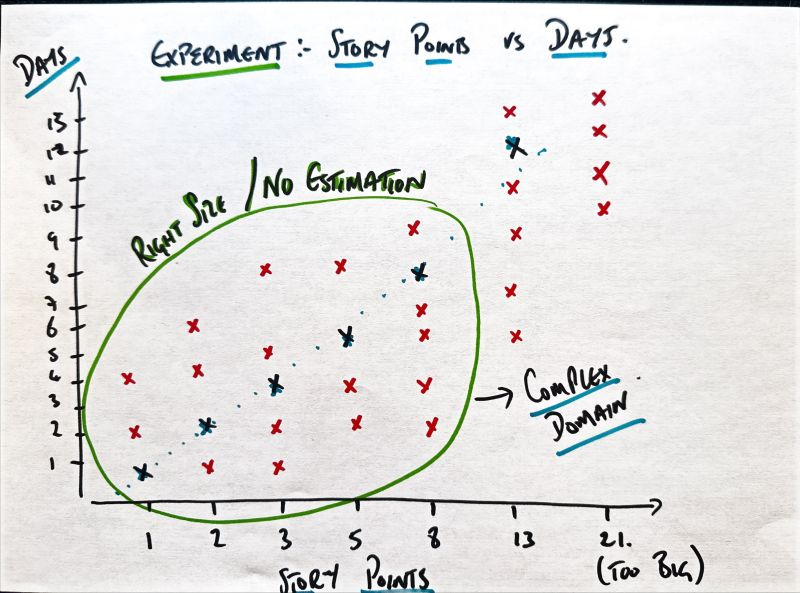
Perhaps story points and velocity were never the most effective way to forecast. In the next post we share a simple experiment that helps teams rethink estimation and move forward.